A church pew should support more than a brief pause. It must remain comfortable through readings, music, prayer, and long services. For worshippers, small design details matter: seat depth, backrest angle, edge shape, and space between neighboring seats. A hard, upright bench may look traditional, yet leave people shifting to ease pressure. This matters.
The question “What are the benefits of ergonomic design in church pews?” has practical answers. A well-shaped seat can distribute pressure more evenly and offer steadier back support. Armrests, suitable spacing, and accessible layouts can also make seating easier for older adults and people with limited mobility. These features do not replace thoughtful pastoral care, but they can help people focus on the service rather than discomfort.
Industrial designer Henry Dreyfuss expressed a useful principle: “When the point of contact between the product and the people becomes a point of friction, then the designer has failed.” His words address design broadly, not church pews specifically, but the idea applies clearly to seating. A pew is where the body meets the building for much of a service. Still, ergonomic design is not one perfect measurement. Different bodies, fabrics, and service lengths change what feels comfortable. A graceful pew can disappoint in use. Testing samples with actual congregants is a sensible step before choosing a full installation.
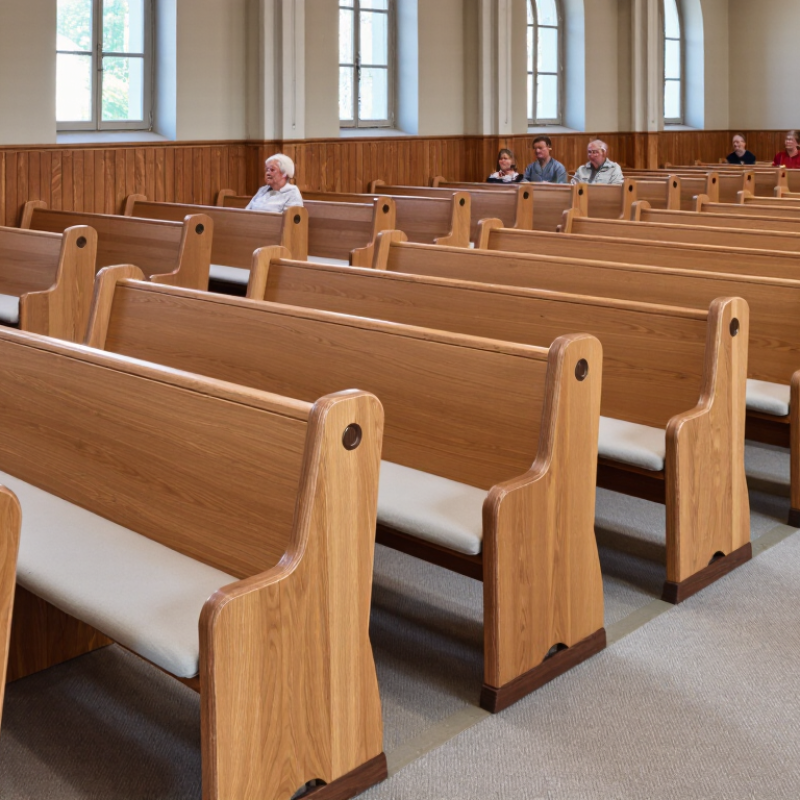
An ergonomic church pew supports a range of bodies during services, not just a quick sit-down. Its seat height should let most people place their feet comfortably on the floor, while a gently shaped backrest supports the lower and middle back. Seat depth matters, too: too much depth can press behind the knees, while too little may leave the thighs unsupported. Small design details make a difference. A rounded front edge, stable armrests, and enough space between rows can make sitting and standing easier.
Tips: Test a sample pew before ordering. Sit for several minutes, then stand without using the seat in front for leverage. Ask people of different heights to try it.
Materials and construction also affect comfort over time. Firm, resilient cushioning can offer support without feeling hard, and durable upholstery is easier to maintain through regular use. Good ergonomics does not mean one shape suits everyone. Older adults, children, and people with mobility needs may prefer different seat heights or armrest positions. That part is easy to overlook. Measure the room carefully, and consider clear walkways alongside seating comfort. A pew can look inviting yet feel tiring after a long service, so real-world testing is worth the effort.
Comfort in a church pew depends on more than soft padding. A supportive backrest follows the spine’s natural shape without forcing a rigid posture. A slight lumbar curve can reduce the urge to slump during a long service. Seat depth matters, too: when it is excessive, shorter worshippers may struggle to keep both feet on the floor. Small details matter. A rounded front edge can reduce pressure behind the knees, while firm, resilient cushioning spreads weight more evenly than a seat that sinks deeply.
Pew dimensions should suit the people who use them, not just look balanced in a room. Adequate space between seats allows worshippers to change position without pressing against a neighbor. A stable backrest also helps people sit upright while reading, singing, or standing. Firm, not rigid. Still, ergonomic features cannot guarantee comfort for every body, and a design that helps one person may feel too deep or too firm to another. Testing a sample seat for several minutes can reveal issues that a showroom glance misses. That practical check is easy to overlook. Small adjustments to seat height, depth, or cushioning may make the pew more welcoming across a congregation.
During a long service, comfort depends on more than a soft seat. People may sit through readings, music, and quiet reflection for an hour or longer. A gently contoured backrest can support the lower back, while suitable seat depth helps keep feet resting on the floor. Small details matter. A hard front edge may press behind the knees, while excessive cushioning can feel unstable when standing.
Armrests can help some people rise and settle, especially older adults, though they may limit seating flexibility. Adequate spacing gives worshippers room to adjust their posture without bumping neighbors. Breathable, easy-to-clean upholstery can also make long periods of sitting more pleasant. Comfort is personal, though. One pew design will not suit every body, so consider different heights and mobility needs instead of assuming one shape works for everyone.
Tips: Test pews by sitting for several minutes, not just briefly. Check whether feet reach the floor and backs feel supported. Ask people with varied needs for feedback. Their comments may reveal an overlooked pressure point.
Selecting pews starts with congregation needs, not catalog dimensions. Estimate typical attendance, peak services, and how long people sit. Older adults, children, and visitors may need different seat heights, armrests, or easier entry. Ask several regular attendees to test a sample. A seat may feel comfortable alone, yet cramped once rows fill. That detail matters.
Measure the worship space, including columns, platform access, and aisle widths. Pew depth and spacing affect legroom, movement, and sightlines. Check whether people can enter and leave a row without disturbing others. If the room hosts varied services, movable seating may offer flexibility, though it can require more storage and setup. There is no perfect layout for every congregation.
Consider materials in light of everyday use. Durable finishes can handle frequent cleaning, while smooth edges and secure joints help with long-term comfort and safety. Compare maintenance needs, repair options, and total cost over time, not just the initial price. Keep room for future changes in attendance or accessibility needs. Small measurements are easy to miss, and costly to correct later.
Accessibility dimensions to consider when planning comfortable, inclusive seating
These ADA minimum dimensions can guide aisle layout and wheelchair-space planning alongside pew comfort factors such as seat support, spacing, and ease of access. Requirements may vary by situation; consult the applicable standards when designing a space.
Source: 2010 ADA Standards for Accessible Design, Sections 304.3.1, 305.3, and 403.5.1. Values shown are inches.
Comfort depends on what happens after delivery. Install each pew on a level floor, align rows carefully, and secure floor fixings into suitable structural material. A small gap between rows can become a daily nuisance when knees, bags, and cleaning tools compete for space. Check that armrests meet consistently and that no seat rocks under normal use. Small shifts matter.
The USDA Forest Products Laboratory’s Wood Handbook reports that wood changes dimension as its moisture content changes below the fiber saturation point, roughly 30%. That makes stable indoor humidity and prompt attention to leaks practical parts of pew care, not just building maintenance.
Inspect joints, fixings, and finish for looseness, chips, or rough edges at regular intervals; tighten or repair them before movement spreads. Clean upholstery with methods suited to its material, and avoid soaking wooden parts. The right method depends on the finish, and guessing can do damage.
ANSI/BIFMA X5.4 provides performance and durability testing criteria for public and lounge seating, useful benchmarks when specifying seating, though it does not replace checks in the actual building. Even careful installation cannot prevent every squeak. Recheck after seasonal changes, when doors and windows may alter indoor conditions. A slight unevenness can survive inspection; invite regular users to report it.
A gently curved backrest can support the lower spine without forcing a rigid position. Firm, resilient cushioning spreads weight more evenly. Comfort still varies from person to person.
A deep seat may leave shorter people unable to place both feet flat on the floor. Test sample seating with several people. A quick glance may miss the problem.
A rounded front edge can ease pressure behind the knees. Supportive padding should not sink too deeply. Small details matter.
Measure attendance needs, aisle widths, columns, and platform access. Leave enough space for people to shift position without pressing against neighbors. Measure twice, if possible.
Check whether people can enter and leave a row without disturbing others. Test a sample with nearby seats occupied. Alone, it may feel different.
Install them on a level floor and secure fixings into suitable structural material. Check for rocking seats and uneven armrests. Small shifts matter.
Keep indoor humidity reasonably stable and address leaks promptly. Clean upholstery using methods suited to its material. Avoid soaking wooden parts.
Regularly check joints, fixings, finishes, and rough edges. Recheck after seasonal changes, and invite users to report discomfort. A squeak may still appear.
Ergonomic church pews are designed to support the body naturally rather than simply provide a place to sit. Features such as a supportive backrest, suitable seat depth, gently contoured surfaces, and thoughtful spacing can encourage better posture and reduce pressure during extended periods of sitting. What are the benefits of ergonomic design in church pews? It can help congregants feel more comfortable, stay focused, and take part in long services with less stiffness and fatigue.
Choosing the right pews means considering the congregation’s needs, room layout, materials, and available space. Installation should provide stable seating and appropriate clearances, while regular cleaning and inspection help preserve comfort and safety over time. By balancing supportive design with practical selection and care, a congregation can create a welcoming place for worship that remains comfortable for years.

TwinVibe Furniture