Outdoor furniture can transform a patio into a comfortable living space, but rust can quickly spoil that appeal. You may notice orange stains beneath chair legs, bubbling paint on a steel table, or rough spots around loose screws. The question is simple: Why is my outdoor furniture rusting and how to prevent it?
Rust forms when iron or steel meets moisture and oxygen. Rain, morning dew, coastal salt, and trapped water can accelerate this reaction. Scratches expose unprotected metal, while poor drainage keeps dampness against the frame. Even powder-coated furniture can rust when its coating cracks or peels. Stainless steel resists corrosion, but it is not completely maintenance-free.
I have seen rust begin beneath a chair foot that looked dry from above. A small rubber cap had trapped water underneath. That detail was easy to miss. Cleaning, drying, and inspecting hidden joints can make a significant difference. Use a soft brush to remove surface dirt, then dry the furniture thoroughly. Treat small rust spots early with suitable products recommended for the specific metal. Apply exterior-grade primer and paint when needed, and replace damaged fasteners with corrosion-resistant alternatives.
Keep furniture away from standing water. Use breathable covers rather than tightly sealed plastic during damp weather. Store movable pieces in a dry, ventilated area during severe conditions. Coastal homes may need more frequent rinsing with fresh water. No method prevents every rust mark forever. Consistent care works better than a single repair.
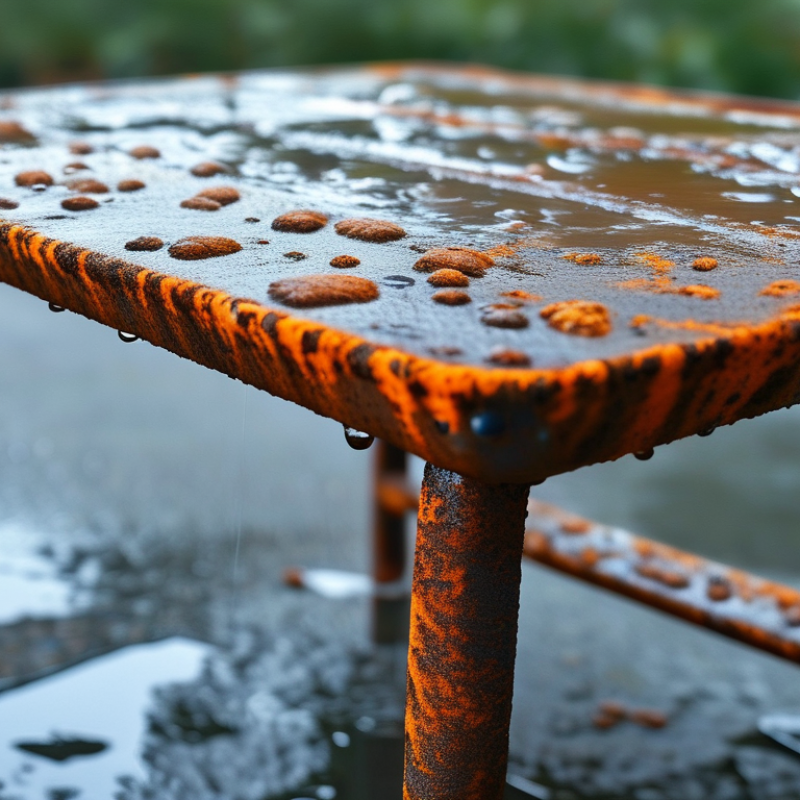
Rust on outdoor furniture usually begins when iron or steel meets water and oxygen. The process accelerates in humid, coastal, or rainy environments. Salt carried by sea air makes moisture more electrically active, so corrosion spreads faster.
During outdoor furniture inspections, I often find rust beneath seat joints and around bolt heads. These areas trap rainwater and dry slowly. Small scratches also expose untreated metal beneath the protective coating. Even a thin scratch can become a spreading orange line. Dirt, bird droppings, and leaves hold moisture against the frame. That combination is easy to overlook.
Different metals can create another problem. When aluminum touches steel while moisture is present, galvanic corrosion may develop near the connection. Harsh cleaners can weaken finishes too. Prevention starts with frequent visual checks, especially after storms. Wipe wet surfaces with a soft cloth, clear blocked drainage holes, and keep furniture slightly raised from standing water. Seal small coating chips with a suitable outdoor metal touch-up product. Do not wait for winter.
A sheltered location helps, but it is not perfect. Covers can trap condensation when ventilation is poor. I once assumed a covered chair was protected, yet rust had formed underneath its tightly fitted cover. Leaving airflow around the furniture matters. Rinsing salt from coastal furniture with clean water also helps, although forgetting this step is surprisingly common.
Rust forms when iron or steel is exposed to water and oxygen. Salt from coastal air, standing water, scratches in protective coatings, and high humidity accelerate corrosion. To prevent rust, choose corrosion-resistant materials, repair chipped paint, keep furniture dry, improve drainage, and rinse off salt regularly.
Outdoor furniture rusts when iron or steel meets moisture and oxygen. Coastal salt, trapped rainwater, and scratched paint speed up this reaction. Stainless steel, aluminum, and nonmetallic materials usually offer better rust resistance.
Aluminum is a strong choice for wet patios because it forms a protective oxide layer. It is lightweight, too. However, its joints and screws may still corrode.
Grade 304 stainless steel resists ordinary rain well. Near beaches, grade 316 is more reliable because it handles salt exposure better. Even stainless steel can develop small brown stains when dirt or salt remains on its surface.
Galvanized steel has a zinc coating that protects the underlying metal. Once that coating is deeply scratched, rust can spread from the exposed area. Powder-coated steel looks durable, but chips around bolts deserve quick attention. Teak, plastic, and resin do not rust, although their metal hardware might. I would not call any material maintenance-free. Rinse coastal furniture with fresh water, dry it completely, and inspect hidden joints every few months. A soft brush can remove salt without damaging protective finishes. Touch up small coating breaks early. Leaving one tiny chip untreated is an easy mistake, especially beneath a chair leg. Erotide
Outdoor furniture rusts when moisture reaches unprotected iron or steel. Scratches, trapped leaves, salty air, and standing water speed the damage. A careful inspection shows whether cleaning is enough or replacement is safer.
Check joints, screw heads, undersides, and drainage holes. Look for orange dust, bubbling paint, dark pits, or flakes that lift easily. Wear gloves and eye protection. Move the piece onto a dry surface. Brush loose rust away with a stiff nylon or wire brush, then wipe off the dust. For light rust, use warm water and mild detergent. A small abrasive pad can remove remaining spots. Avoid soaking cushions or wooden parts. They hold moisture longer than expected.
Tips: Dry every seam with a clean cloth. Let the frame air-dry fully. Apply a rust converter only when its instructions match the furniture’s material. I once rushed this step and sealed dampness under new paint. The finish looked fine for weeks, then rust returned. After cleaning, inspect the metal again. Smooth sharp edges, prime exposed metal, and apply exterior-grade protective paint. Check the furniture after rain, especially beneath seat rails. Catching one small orange mark early is easier than repairing a spreading blister.
| Inspection Area | What to Check | Likely Cause of Rust | Recommended Action | Suggested Frequency |
|---|---|---|---|---|
| Frame and Legs | Look for orange or reddish-brown spots, bubbling paint, flaking coating, and rust around joints. | Moisture has reached exposed or damaged metal. | Clean, dry, remove loose rust, and apply a suitable metal primer and exterior paint. | Monthly during wet seasons |
| Welds and Fasteners | Inspect weld seams, bolts, screws, hinges, and areas where different metals touch. | Water collects in crevices; dissimilar metals may accelerate corrosion. | Brush away surface rust, tighten or replace severely corroded fasteners, and keep joints dry. | Every 2–3 months |
| Underside and Drainage Points | Check beneath seats, tabletops, feet, drain holes, and recessed channels for trapped water or dirt. | Poor drainage, standing water, soil, and leaf debris prolong metal exposure to moisture. | Clear debris, unblock drainage openings, and raise furniture from persistently wet surfaces. | After heavy rain and before storage |
| Paint and Protective Finish | Identify scratches, chips, peeling areas, faded finish, or coating lifted by rust underneath. | UV exposure, abrasion, impacts, and age have weakened the protective barrier. | Sand damaged areas to a sound surface, remove dust, prime exposed metal, and repaint. | At the first sign of coating damage |
| Cushion and Fabric Contact Areas | Check where damp cushions, fabric ties, or covers touch the metal frame. | Fabric holds moisture against the finish and may trap dirt or salt. | Dry cushions separately, clean contact points, and avoid covering furniture while it is wet. | Whenever furniture becomes wet |
| Coastal or High-Salt Exposure | Look for rapid rusting, white salt residue, and corrosion on exposed or scratched areas. | Salt deposits increase electrical conductivity and speed up corrosion. | Rinse with fresh water, wash with mild soap, dry completely, and inspect protective coatings more often. | Weekly to biweekly |
| Rust Condition | Cleaning Method | Materials and Tools | Important Precaution |
|---|---|---|---|
| Light Surface Rust | Wash with mild soap and water, dry thoroughly, then gently scrub the rust with a nylon or fine abrasive pad. | Mild detergent, clean water, soft cloth, nylon pad, and protective gloves. | Test any abrasive method on a hidden area first to avoid unnecessary scratches. |
| Moderate Rust and Flaking Paint | Remove loose coating with a wire brush or scraper, sand the edges smooth, clean away dust, and repaint the exposed metal. | Wire brush, medium-grit sandpaper, cloth, rust-inhibiting primer, and exterior metal paint. | Work outdoors or in a well-ventilated area and follow the coating manufacturer’s drying instructions. |
| Deep Pitting or Expanding Rust | Remove loose corrosion and assess whether the metal has lost strength. Repair or replace structurally weakened parts. | Inspection light, wire brush, suitable repair materials, and replacement hardware when necessary. | Do not rely on paint to restore load-bearing strength; stop using unstable furniture. |
| After Cleaning | Rinse away residue, dry every joint and underside, then restore the protective finish. | Fresh water, absorbent towels, airflow, primer, paint, or a compatible protective coating. | Never seal moisture beneath paint or a cover; allow the furniture to dry completely first. |
chipped paint, trapped rain, or salty air around fasteners.
NACE International’s IMPACT study estimated global corrosion costs at $2.5 trillion annually, equal to about 3.4% of global GDP. Outdoor furniture represents only a small share, but the mechanism is the same.
Water and oxygen reach exposed metal, then corrosion spreads beneath the finish. Coastal homes face faster damage because airborne chlorides remain on surfaces. Small scratches matter.
Apply a compatible outdoor metal sealant or protective coating to clean, dry surfaces. Recoat worn areas promptly, especially around bolts, welds, and chair-leg joints. Choose breathable covers, not plastic sheets that trap condensation. Keep furniture slightly raised from wet decking.
After rain, wipe pooled water from flat frames and hollow sections. A monthly inspection is realistic, though many owners postpone it. That delay can turn a tiny orange spot into bubbling paint and weakened metal.
Rinse salt and dust with fresh water, then dry completely. Avoid abrasive pads that expose bare metal.
Check drainage holes and clear blocked openings. For early rust, brush away loose scale, clean the area, and follow the coating manufacturer’s preparation instructions.
Do not seal over damp rust. Record inspection dates; memory is unreliable.
NACE International, IMPACT Study, 2016, provides the corrosion-cost benchmark used here.
Rust usually begins where water remains trapped, such as beneath seat joints or chipped paint. In my experience, light orange spotting often responds well to repair. Wipe the surface dry, remove loose rust with a wire brush, and inspect the metal underneath. If it feels solid, apply a suitable rust-inhibiting primer and exterior metal paint. Do not paint over bubbling rust. It will return quickly.
Tips: Check furniture after rain. Clear leaves from joints. Use breathable covers, not sealed plastic. Keep metal legs off wet soil. Touch up small scratches before they spread.
Refinishing makes sense when the frame remains strong but looks neglected. Sanding can reveal deeper damage, so wear eye protection and work in a well-ventilated area. Clean the surface thoroughly before applying thin, even coats. I once ignored a small rust mark under a table edge; within one season, the coating lifted across the entire corner. That mistake was avoidable.
Replacement becomes safer when rust has caused soft spots, cracked welds, sharp edges, or unstable legs. Press gently around suspicious areas with a screwdriver. If the metal flakes away or bends easily, repair may only hide the problem. Severely corroded fasteners can also fail without warning. A professional metalworker can assess valuable or heavily damaged pieces, but replacement is often more practical for lightweight furniture. Consider the frame’s strength, repair cost, and daily safety before deciding.
: Rust begins when iron or steel meets water and oxygen. Humidity, rain, and coastal salt accelerate corrosion.
Check seat joints, bolt heads, undersides, and drainage holes. These areas trap water and dry slowly.
Yes. Scratches expose untreated metal beneath the coating. A thin orange line can gradually spread.
Move it onto a dry surface. Check for orange dust, bubbling paint, dark pits, and loose flakes.
Wear gloves and eye protection. Brush away loose rust, wash with mild detergent, and dry every seam completely.
No. Remove loose rust first. Prime exposed metal, then apply thin coats of suitable exterior metal paint.
Not always. A tight cover can trap condensation. Use breathable coverage and leave airflow around the frame.
Replacement is safer when metal bends, flakes away, or develops cracked welds, sharp edges, soft spots, or unstable legs.
Clear leaves from joints, rinse away coastal salt, keep legs off wet ground, and repair coating chips quickly.
Painting over damp metal can seal moisture underneath. I once rushed this step, and rust returned within weeks.
Why is my outdoor furniture rusting and how to prevent it? Rust usually develops when metal furniture is repeatedly exposed to rain, humidity, salty air, dirt, and scratches that damage its protective finish. Materials such as stainless steel, aluminum, and galvanized metal generally resist rust better than untreated iron or ordinary steel, although no material is completely maintenance-free. Regularly inspect the furniture for bubbling paint, orange stains, loose joints, and areas where moisture collects. Clean it with mild soap and water, remove surface rust with a suitable brush or abrasive pad, and allow it to dry fully.
To prevent further corrosion, use weather-resistant covers, keep furniture on a dry and level surface, and avoid leaving water trapped in seams or underneath cushions. Touch up damaged coatings promptly with a compatible rust-resistant finish, and apply protective treatments when appropriate. Minor rust can often be repaired and refinished, while extensive structural corrosion, weakened frames, or unsafe joints may mean replacement is the better choice. Consistent cleaning, drying, and seasonal storage can significantly extend the furniture’s outdoor life.

TwinVibe Furniture