How to Fix Wobbly Tables in a Busy Restaurant?

Time:2026-09-30 Author:Sophia
0%

A wobbly table can turn a calm meal into a balancing act. Glasses ripple, cutlery slides, and guests notice every small movement. In a busy restaurant, staff may reach for a folded napkin and move on. It works for a moment, but it can look untidy and may not solve the cause. How to fix wobbly tables in a busy restaurant? Start by finding out whether the problem comes from an uneven floor, a loose joint, or a worn table leg.

A careful check takes only a little time. Clear the tabletop, then press gently on opposite corners and watch which leg lifts. Check that the floor is clean and dry, and look for damaged feet, loose fasteners, or cracks. Small details matter. A missing glide can make a sturdy table rock; a loose frame may need proper repair instead. Use levelers or replacement glides suited to the table, and follow the manufacturer’s guidance. Avoid forcing screws into worn wood. That can make the damage worse.

Staff can flag repeat problems during a shift, while a manager or qualified repair professional handles structural damage. Keep a simple maintenance log with the table number and what was observed. It is not glamorous, and records can be missed during a rush. Still, they help reveal patterns and prevent the same table from surprising guests again. Test the table after any adjustment with light pressure, then check it again before service. A stable table supports comfort, protects dishes, and helps the dining room feel cared for.
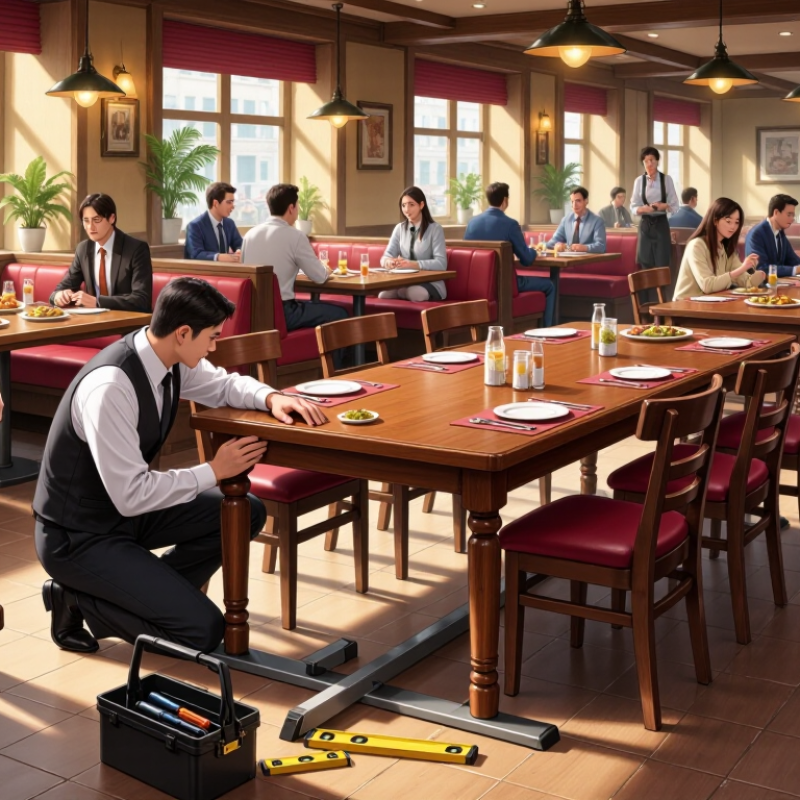
How to Fix Wobbly Tables in a Busy Restaurant?

Identify the Cause of the Table’s Instability

A wobbling table is not always a furniture problem. Before adjusting anything, clear the surface and ask a staff member to press gently on each corner. Watch which leg lifts, and note whether the movement changes when the table is turned. These small checks can reveal whether the cause is a short leg, a loose joint, or an uneven floor.

Look closely. A leg may have a worn glide, a cracked connection, or a screw that has gradually loosened under daily use. Check beneath the tabletop for shifting brackets, and feel each leg for movement where it joins the frame. If the table wobbles in the same way after being moved to another spot, the table itself is the likely source. If it steadies elsewhere, inspect the original floor area for a dip, raised tile, or loose flooring. Don’t assume the first explanation is right; I’ve seen a seemingly faulty table settle after a crumb was cleared from beneath one foot.

Avoid stacking loose paper or improvised objects under a leg in a busy dining area. They can slip when guests lean on the table. Record the location and the movement, then have a trained maintenance person check any damaged joints or fittings. A quick diagnosis helps distinguish a simple floor issue from a repair that should wait until the table is safely out of service.

Clear the Area and Check for Safety Risks

A wobbly table can become a trip hazard when servers carry hot plates through a crowded dining room. Clear the surrounding area before touching it. Move chairs, trays, bags, and floor signs away from the table’s legs. Keep guests outside the work zone, especially children and anyone using mobility aids. OSHA restaurant safety guidance identifies slips, trips, and falls as recurring workplace hazards. A small obstruction can matter during a busy service.

Check the floor before adjusting the table. Look for spilled oil, broken tiles, loose mats, or uneven surfaces. Do not place folded napkins, cardboard, or disposable items under a leg. They compress, slide, and create another hazard. The 2023 Bureau of Labor Statistics data recorded about 3.6 nonfatal injury and illness cases per 100 full-time workers in food services and drinking places. That figure covers many hazards, not tables alone, but it supports careful housekeeping.

Test the table with an empty surface first. Press each corner gently, then apply light pressure near the center. If it rocks, remove it from service and mark it clearly. Tighten accessible fasteners only when the design allows it. Never force a damaged leg or cracked base back into use. The FDA Food Code 2022 emphasizes maintaining equipment in good repair and positioning it to prevent contamination or injury. I have seen teams rush this check during a dinner surge. That shortcut feels efficient, but it often leaves the real risk hidden.

Level the Table with Adjustable Feet or Shims

A wobbly table can send drinks trembling and make guests shift their elbows. On a busy floor, fix it before service if you can. Clear the tabletop, then ask someone to press gently on opposite corners. Watch which foot lifts. A quick check saves guesswork.

For tables with adjustable feet, lift one edge slightly and turn the loose foot a little at a time. Lower the table and test it again. Keep adjustments small; extending one foot too far can make the table unstable. Check that the foot stays firmly attached and has enough contact with the floor. Then press each corner and place a glass of water near the center. Still moving? Recheck the floor and all four feet. It takes patience.

For fixed legs, use a firm, non-compressible shim under the short leg. A thin plastic or hardwood shim is usually more dependable than folded paper or cardboard, which can flatten or shift during service. Trim or tuck away any exposed edge so shoes and cleaning tools do not catch it. Avoid stacking loose scraps. If the wobble returns, the floor may be uneven, or a leg may be damaged. I’ve seen a tiny shim solve a small gap, but it is not a repair for a cracked joint. Ask maintenance to inspect persistent movement before guests lean on the table.

Repair Loose Joints and Damaged Components

A wobbly table often points to a loose joint, not an uneven floor. Remove it from service, unload it, and check each leg-to-apron connection. Look for backed-out screws, stripped holes, cracked wood, and loose threaded inserts. Tighten sound connections with the correct tool, working evenly around the frame. Replace stripped fasteners or damaged inserts; tightening them harder can worsen the damage. For a split joint, use a repair method suited to the material, then allow any adhesive to cure fully before testing.

Check the feet and glides, too. A missing glide can make a sound frame rock on tile, while a bent leg needs proper repair or replacement. The U.S. Bureau of Labor Statistics reported 2.4 recordable workplace injuries and illnesses per 100 full-time workers across private industry in 2023. That figure is not specific to tables, but it reinforces the value of routine hazard checks. A rushed shim may steady the surface briefly while leaving a failing joint untouched. Small movement matters.

Tips: Test the repaired table on a level floor by pressing each corner, then apply gentle side pressure. If it shifts, creaks, or opens at a joint, keep it out of service and reassess the damaged component. Note recurring failures by table location; a pattern may reveal worn hardware or repeated floor-leveling issues.

How to Fix Wobbly Tables in a Busy Restaurant? — Repair Loose Joints and Damaged Components
Problem Likely Cause Repair Action Tools and Materials Typical Time Safety and Quality Check
Table rocks on a level floor Loose fasteners, uneven leg lengths, or a loose joint between the apron and leg Turn the table upside down, tighten accessible bolts, and inspect each leg-to-apron connection. Replace missing or stripped fasteners. Screwdriver or hex key, replacement screws or bolts, washers 10–20 minutes Set the table upright and press gently on each corner. Confirm that all legs contact the floor.
Leg joint moves when the table is pushed Worn, cracked, or loose wood-to-wood joint Remove the loose joint’s fasteners if needed, clean away old debris, apply wood glue to suitable bare wood surfaces, clamp the joint, and refit or replace the fasteners after curing. Wood glue, clamps, clean cloth, drill or screwdriver, suitable fasteners 30–60 minutes, plus glue curing time Follow the glue maker’s curing directions before returning the table to service. Do not rely on glue alone if the joint is structurally damaged.
One leg is visibly shorter or the floor is slightly uneven Uneven flooring, a worn foot, or a leg cut or assembled out of square Fit an adjustable leveling glide or replace the worn foot. Adjust only enough to stop the movement without lifting another leg off the floor. Adjustable furniture glide, screwdriver or wrench, replacement foot if required 5–15 minutes Check stability from several sides and make sure the glide is secure and does not slide across the floor.
Metal table frame shifts at a corner Loose bolts, worn inserts, or a damaged bracket or weld Tighten the frame bolts evenly. Replace worn hardware or inserts with compatible parts. Take a table with a cracked weld out of service for professional repair or replacement. Correct-size wrench or hex key, compatible bolts and inserts 10–25 minutes for hardware; longer for structural repair Do not use a table with a cracked weld or bent load-bearing frame. Confirm there are no sharp edges or protruding fasteners.
Tabletop shifts independently of the base Loose mounting screws, damaged threaded inserts, or missing brackets Inspect the underside and tighten the mounting hardware. Replace damaged inserts or brackets, using fasteners that do not pierce the tabletop. Screwdriver, replacement brackets or inserts, correctly sized screws 15–30 minutes Check that the top cannot slide or rotate during normal use and that no screw tip is exposed on the tabletop.
Fastener will not tighten Stripped screw hole, worn bolt, or damaged threaded insert Replace the fastener with the correct size. Repair a stripped wood hole with an appropriate wood repair method, or replace a failed metal insert rather than forcing a larger screw into the joint. Replacement fastener, drill, compatible insert or wood repair material 15–40 minutes Use hardware suited to the material and joint. Recheck the repair after the specified adhesive or filler cure time.
Table remains unstable after tightening Cracked wood, bent frame, badly damaged joint, or multiple worn components Remove the table from use. Replace the damaged structural component or arrange a qualified repair; do not hide the defect with a shim or cosmetic filler. Replacement structural component or qualified repair service Assessment required Return the table to service only after it stands firmly, all joints are secure, and it passes a careful stability check.

Test the Table and Prevent Future Wobbling

Before service, test each table on the actual dining-room floor. Press down on opposite corners, then gently shift the top from side to side. Watch each leg, not just the tabletop. A loose joint may move only when weight shifts near an edge. Check again with chairs tucked in; chair legs can hide a short or uneven table foot. A quick shove can fool you. Repeat the check after moving the table and whenever staff report a wobble.

The U.S. Bureau of Labor Statistics reported a 3.0 total recordable injury and illness rate per 100 full-time workers in accommodation and food services in 2023. That figure covers many hazards, not table-related incidents, but it underscores why routine checks matter in busy workplaces. Fit adjustable glides to uneven floors, tighten fasteners with the correct tool, and replace cracked or bent components. Don’t use folded napkins as permanent shims; they compress and shift during service. Record the table number, defect, and repair date on a simple maintenance log. Check repaired tables before reopening them to guests. Even a careful check can miss a fault that appears only under load, so re-test after repairs and during periodic floor inspections.

How to Fix Wobbly Tables in a Busy Restaurant? — Test the Table and Prevent Future Wobbling

Use this practical inspection schedule to identify movement early. Test all four table corners, check for loose fasteners, confirm that every leg contacts the floor, and record any visible gap in millimeters before service begins.

Routine: Check tables every shift, repeat the test after a spill or relocation, perform a weekly hardware inspection, and complete a monthly preventive maintenance review. Repair loose joints and replace worn leveling feet before the table returns to service.

FAQS

How can I identify why a table is wobbling?

Clear the tabletop first. Press each corner gently and watch which leg lifts. My first guess may be wrong. Turn the table and repeat the test. The result can reveal a short leg, loose joint, or uneven floor.

How can I tell whether the floor or table causes the movement?

Move the empty table to another area. If it steadies, inspect the original floor. Look for a dip, raised tile, loose mat, or crumbs beneath one foot. If it still wobbles, inspect the table itself.

What safety steps should I take before checking the table?

Move chairs, trays, bags, and signs away from the legs. Keep guests outside the work area. Check for spills, broken tiles, and loose flooring. Hot plates and crowded walkways increase the risk of trips.

Should I keep using a table that rocks during service?

No. Remove it from service if gentle pressure makes it move. Mark it clearly for staff. Do not let guests lean on it. A trembling glass can quickly become a spill.

Can I place paper or cardboard under a short leg?

Avoid loose paper, napkins, and cardboard. They compress or slide during use. A firm plastic or hardwood shim is safer for a small gap. Keep its edge hidden from shoes and cleaning tools.

How do I adjust a table with adjustable feet?

Lift one edge slightly and turn the loose foot a little. Lower the table and test again. Use small adjustments. Extending one foot too far can create new instability. Check that the foot remains firmly attached.

How can I test whether the table is stable after adjustment?

Press each corner gently. Then press near the center. Place a glass of water near the middle. Watch for ripples or movement. Still moving? Check the floor and all four feet again.

When should maintenance inspect the table?

Request inspection when movement continues after leveling. Also report cracked joints, damaged legs, loose screws, or shifting brackets. Do not force a damaged base back into service. A small shim solves a gap, not a structural fault.

Conclusion

How to fix wobbly tables in a busy restaurant? Start by identifying the source of the instability. Check whether the problem comes from an uneven floor, loose hardware, bent legs, worn feet, or a damaged frame. Before making adjustments, clear the surrounding area and remove anything that could fall or create a trip hazard. Carefully inspect the table and keep it out of service if it presents a safety risk.

For minor height differences, use the table’s adjustable feet or place a suitable, stable shim beneath the short leg. Tighten loose screws, bolts, and joints, and replace any cracked or badly damaged components. Afterward, test the table by applying gentle pressure from several directions and confirming that it remains steady during normal use. To prevent future wobbling, include tables in routine maintenance checks, respond promptly to customer or staff reports, and monitor floors and hardware for signs of wear.

Sophia

Sophia

Sophia is a dedicated marketing professional with an exceptional depth of knowledge about her company's products and services. With a keen understanding of market trends and customer needs, she crafts insightful blog posts that not only inform but also engage readers, enriching the company’s online......