When considering outdoor furniture, many homeowners struggle with the question: "Why should I invest in aluminum instead of iron for patio sets?" Industry experts highlight the significant advantages of aluminum. According to a recent report by the Outdoor Furniture Association, aluminum patio sets have surged in popularity due to their lightweight nature and resistance to corrosion. These benefits make them ideal for various climates.
John Harrison, a renowned outdoor furniture designer, emphasized, "Aluminum furniture not only offers durability but also minimizes maintenance costs." Unlike iron, aluminum does not rust, which can save homeowners money over time. The lifespan of aluminum sets often exceeds that of iron, making them a smarter long-term investment.
Moreover, modern aluminum designs now offer the aesthetic appeal that many desire. There's a range of finishes that can mimic wood or create a sleek contemporary look. While some may worry about the perceived sturdiness of aluminum, many products feature a strong build. In conclusion, the choice often leans toward aluminum when considering both functionality and design.
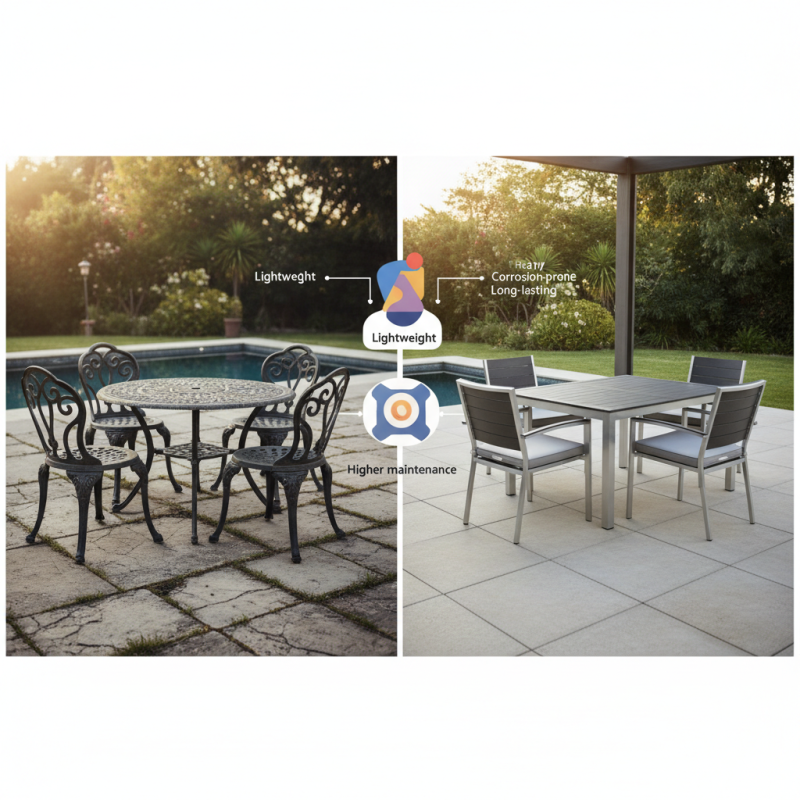
Understanding the Characteristics of Aluminum vs. Iron Patio Sets
When choosing patio sets, aluminum and iron each have distinct characteristics. Aluminum is lightweight and resistant to rust. This makes it ideal for areas with high humidity. It is easy to move and rearrange, catering to your space’s dynamic nature. Meanwhile, iron is heavy and sturdy, offering a classic vintage look. However, it can rust and requires more care.
Tips: Consider your climate before deciding. If you live near the coast, aluminum is a better option. For those who value durability, iron can withstand strong winds but needs proper maintenance. A good choice factors in not just aesthetics but also practicality.
Another aspect is the finish. Aluminum typically has a powder-coated finish, which is attractive and easy to clean. Iron sets often have a classic paint but may chip over time. Finding the right coating can affect both appearance and longevity. Both materials can be stylish, but only one will fit your lifestyle perfectly.
Comparison of Aluminum and Iron Patio Sets
The chart above compares key characteristics of aluminum and iron patio sets. Aluminum is lighter, more resistant to rust, and requires less maintenance compared to iron, which is heavier and may require more care to prevent rust. Cost and durability are also important factors to consider when choosing between the two materials.
Evaluating Durability and Weather Resistance in Patio Materials
When considering patio sets, durability and weather resistance are key.
Aluminum is lightweight and more resilient than iron. Iron rusts easily when exposed to moisture, while aluminum withstands various weather conditions. This makes aluminum a smart choice for a patio setting that experiences rain, sun, or snow.
Tip: Regular maintenance can prolong the life of aluminum. A simple wash with soapy water keeps it looking fresh and prevents grime buildup. Choose furniture with anodized finishes for added protection against the elements.
Aluminum's ability to resist corrosion is impressive. However, not all aluminum is created equal. Thinner materials may dent easily and compromise sturdiness. Therefore, you need to evaluate the thickness of the aluminum when choosing your set.
Tip: Don’t overlook warranties. A robust warranty indicates manufacturer confidence in their product's durability. This could save you money on replacements in the long run. Look for sets specifically designed for outdoor use, ensuring they can handle your climate.
Comparing Weight and Maneuverability of Aluminum and Iron Furniture
When choosing between aluminum and iron for patio sets, weight and maneuverability are key factors.
Aluminum is significantly lighter than iron, making it easier to move and rearrange your outdoor furniture. According to a report from the American Furniture Manufacturers Association, aluminum furniture can be up to 50% lighter than comparable iron pieces.
This is particularly beneficial for those who enjoy changing their patio layout frequently or need to store furniture during off-seasons.
Iron offers stability but can be cumbersome. A standard iron chair weighs around 25-30 pounds, while an aluminum chair typically weighs just 10-15 pounds. This noticeable difference impacts not only ease of use but also the ability to transport the furniture for events or gatherings. Additionally, resting or moving iron pieces often requires more effort, which can lead to fatigue over time.
Tip: Before investing, consider your lifestyle. If you host frequently or have limited storage, aluminum may be the better choice. However, if you value stability in windy conditions and have a fixed patio setup, iron might serve better. Test each material’s weight and feel by visiting local showrooms to ensure it complements your daily routines.
Assessing Aesthetic Appeal and Design Options for Outdoor Spaces
When considering outdoor furniture, aluminum shines with its modern aesthetic. Its sleek lines and vibrant color options can transform any patio into a stylish retreat. The lightweight nature of aluminum allows for easily rearranging your outdoor setup. This flexibility accommodates various social gatherings, from intimate dinners to lively barbecues.
In contrast, iron often appears heavier and bulkier. While it can have a classic appeal, it may lack the variety in design offered by aluminum. Many people overlook the corrosion factor. Aluminum naturally resists rust, while iron requires regular maintenance. This concern can detract from your enjoyment of outdoor spaces.
For those passionate about design, aluminum's versatility is a game-changer. You can find eclectic styles ranging from sleek modern to Mediterranean charm. However, it’s crucial to reflect on your personal tastes and lifestyle. Aesthetic choices should cater to your daily life rather than just trends. Sometimes, this might even lead to unexpected results. Taking time to evaluate these aspects can make a significant difference in your outdoor experience.
How to Choose Aluminum Over Iron for Your Patio Sets?
| Feature |
Aluminum |
Iron |
| Weight |
Lightweight for easy movement |
Heavy and more difficult to move |
| Rust Resistance |
Highly resistant to rust |
Prone to rust without proper maintenance |
| Maintenance |
Low maintenance required |
Higher maintenance due to rusting |
| Design Versatility |
Available in various styles and colors |
Limited design options compared to aluminum |
| Cost |
Generally more affordable |
Tends to be more expensive |
| Environmental Impact |
Recyclable and eco-friendly |
Less recyclable options available |
Considering Cost and Maintenance Factors for Patio Set Materials
When selecting patio sets, cost and maintenance play crucial roles.
Aluminum offers a lighter and often more cost-effective solution than iron. Many homeowners prefer aluminum for its affordability and ease of handling.
However, you may notice a trade-off in durability. While aluminum resists rust, it can dent more easily than iron. Assess your local weather conditions before making a decision.
Maintenance is another area where aluminum shines. It generally requires less upkeep, needing only occasional cleaning to maintain its appearance. In contrast, iron can rust if not properly treated. Homeowners must invest time and effort in painting or sealing iron to keep it looking good. This added responsibility may not suit everyone, especially those with busy lifestyles.
Consider your patio’s function and aesthetic appeal as well. If you’re looking for a lightweight option that adapts easily to changes, aluminum may work well.
However, if you prefer a classic look with robust build quality, iron might be your choice. In the end, understanding the pros and cons of each material is vital in making the right decision for your outdoor space.
FAQS
: Aluminum is significantly lighter, often up to 50% less than iron.
Lighter aluminum furniture is easier to move and rearrange. Iron pieces can be cumbersome.
A standard iron chair weighs about 25-30 pounds.
An aluminum chair typically weighs around 10-15 pounds.
Lightweight aluminum allows for easy transport, unlike heavier iron.
Aluminum offers modern styles, while iron has a more classic look.
No, aluminum resists rust naturally. Iron needs regular maintenance.
Consider hosting frequency and storage space when deciding which material to choose.
Testing helps ensure the furniture suits your daily routines and comfort.
Think about personal tastes and how they fit into your daily life.
Conclusion
When deciding on patio sets, many homeowners may wonder, "Why should I invest in aluminum instead of iron for patio sets?" Aluminum offers distinct advantages over iron, particularly in terms of weight, maneuverability, and resistance to rusting. Unlike iron, aluminum is lightweight and easier to move, making it ideal for rearranging outdoor spaces. Additionally, aluminum’s weather resistance ensures longevity and minimal maintenance, as it won’t corrode or fade like iron can.
Moreover, aluminum furniture often boasts a wide array of aesthetic options, enhancing the design appeal of outdoor areas. While costs may vary, the durability and reduced maintenance requirements of aluminum can lead to long-term savings. By evaluating these characteristics, homeowners can make an informed decision that enhances both functionality and style in their outdoor living environments.

 TwinVibe Furniture