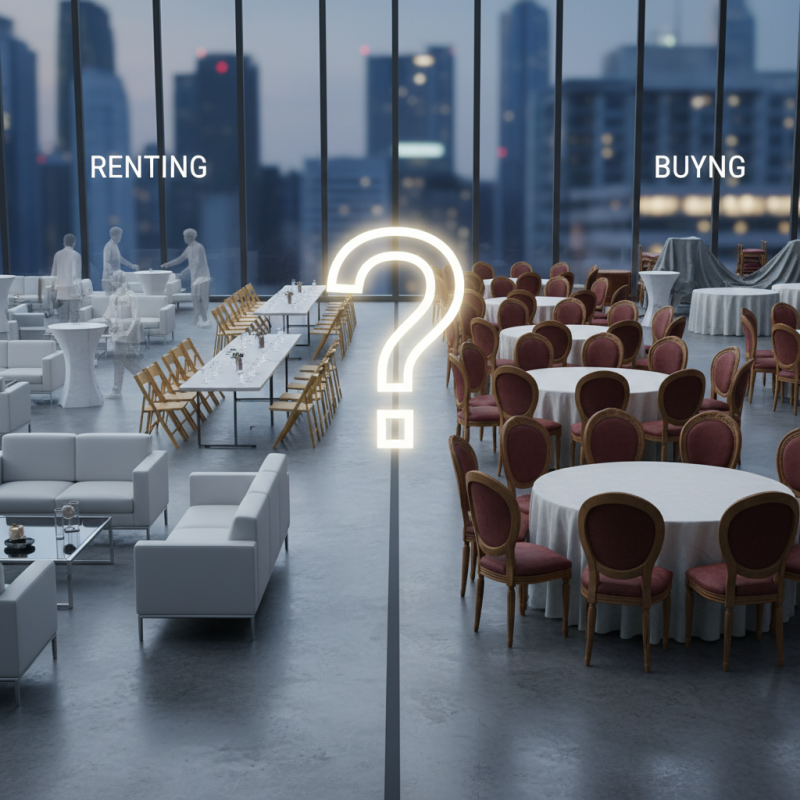
When planning an event, one key question arises: "Is it cheaper to rent or buy event furniture for a venue?" This decision can significantly impact budgets. According to a recent industry report, approximately 45% of event planners prefer renting furniture to avoid the high upfront costs of purchasing. Renting allows flexibility for different setups, which is essential for diverse events.
Many venues face a dilemma. While buying furniture can mean long-term savings, the initial investment is often daunting. A study by the Event Leadership Institute shows that the average cost of new event furniture can reach up to $25,000. This is a considerable sum for any event budget. Yet, renting might lead to hidden fees, especially for delivery and setup.
Ultimately, the choice hinges on specific needs. If a venue hosts frequent events, buying may be financially sound. However, for one-time or infrequent gatherings, renting seems more practical. Evaluating storage, maintenance, and future use is crucial. Thus, understanding the dynamics of rental versus purchase is essential for event planners seeking cost-effective solutions.
Factors Influencing the Cost of Renting vs. Buying Event Furniture
When considering whether to rent or buy event furniture, several factors come into play. First, the initial cost of purchasing furniture is often higher. This includes not just the price of the items, but also transportation and storage. Renting, on the other hand, usually requires a smaller upfront investment. Many venues find that renting furniture allows them flexibility. They can select various styles suited for different occasions without long-term commitments.
Maintenance is another vital aspect. Owning furniture means dealing with wear and tear over time. This leads to additional costs for repairs and replacements. Conversely, rental companies often manage the upkeep of their inventory. They ensure items are in pristine condition for each event. Thus, this can result in lower long-term costs for businesses that frequently host events.
Storage can also become a significant concern.
If your venue lacks space, buying large quantities isn't practical. Rentals can provide a solution, offering the furniture needed without cluttering the venue when it is not in use. Yet, it’s crucial to evaluate the frequency of events. For venues with regular events, purchasing might make more sense financially. Each option has its pros and cons; the best choice depends on individual circumstances and priorities.
Comparative Analysis of Rental and Purchase Costs for Event Furniture
When deciding between renting or buying event furniture, it's essential to analyze costs carefully. Renting may seem convenient, but the expenses can add up quickly. For example, a single event may require numerous chairs, tables, and decor. Over time, rental fees can exceed the cost of purchasing items outright. It is crucial to calculate these potential expenses based on expected events each year.
On the other hand, purchasing furniture involves a significant initial investment. Depending on the quality and type, buying could strain a budget. Yet, owning furniture can lead to long-term savings. For venues hosting frequent events, having available furniture eliminates recurring rental costs. Consider storage and maintenance as well. These factors add complexity to the decision-making process.
Understanding the specific needs of your venue is vital. If events are sporadic, renting might be the more economical choice. However, for constant usage, buying could prove beneficial. Reflect on how often you will actually use the furniture. Evaluating wear and tear on purchased items is also key. Ultimately, each option has its advantages and drawbacks, and the best decision varies based on individual circumstances.
Long-term Financial Implications of Renting vs. Buying Furniture
When considering event furniture, renting and buying each presents unique long-term financial implications. Renting furniture often has a lower upfront cost. It allows venues to offer a variety of styles without a heavy investment. However, over time, rental fees can accumulate. Frequent rentals for events can lead to higher overall costs compared to a one-time purchase. You may love the flexibility of renting, but that convenience can become an expensive choice.
On the other hand, buying furniture involves a significant initial expense. The upfront investment might seem daunting. Yet, own furniture can provide long-term savings. Once you purchase, there are no recurring rental costs. Over several years, this can drastically reduce your expenses. You gain the benefit of customization, ensuring the furniture fits your venue perfectly.
But, owning comes with its own challenges. Regular maintenance is necessary, and wear and tear can add hidden costs. You need to weigh the durability of the furniture against its potential need for replacement. Ultimately, understanding the nuances of renting versus buying is crucial for making a financially sound decision for your venue. Balancing convenience and cost efficiency can lead to reflections on what's truly best for your long-term needs.
Is It Cheaper to Rent or Buy Event Furniture for Your Venue?
Quality and Variety Considerations for Event Furniture Options
Choosing event furniture involves careful thought about quality and variety. Renting offers flexibility, allowing you to access a wide range of styles without commitment. You can find modern chairs, vintage tables, or even unique decorative pieces. This diversity makes it easier to match your venue's theme superbly. However, rented items may vary in quality. Some items could look worn or may not match your expectations.
Buying furniture provides a specific, curated look. You can choose high-quality pieces that align with your brand or venue identity. This can be a worthy investment if you host events regularly. However, storage becomes a challenge. High-quality furniture often requires upkeep and can incur additional costs. It can lead to frustration when items are damaged or when you wish to refresh your venue's look.
In both cases, reflecting on your specific needs is crucial. Consider the events you host and their scale. Think about how long you plan to use the furniture. Quality matters, but so does variety. Balancing these factors will ensure you make the best decision for your venue.
Maintenance and Storage Costs for Owned Event Furniture
When deciding whether to rent or buy event furniture, maintenance and storage costs are key factors. Owning furniture may seem like a long-term investment. Yet, the hidden costs can quickly add up. You need to consider wear and tear, repairs, and replacement parts. These expenses can render ownership less cost-effective over time.
Storage is another critical aspect. Where will you keep the furniture when it's not in use? Renting eliminates this issue, allowing for greater flexibility. If you own furniture, you need sufficient space to store it properly. Improper storage can lead to additional damages and even higher costs.
**Tip:** Keep a detailed inventory of owned items. It helps track maintenance schedules and potential repairs.
Renting can provide immediate access to the latest trends without the burden of upkeep. However, owning offers a sense of personalization for your venue. Weigh the pros and cons carefully. Analyze your event frequency and budget constraints.
**Tip:** Consider seasonal storage options for owned furniture. This might ease some overhead costs. Make sure to frequently reassess your furniture needs.
Is It Cheaper to Rent or Buy Event Furniture for Your Venue? - Maintenance and Storage Costs for Owned Event Furniture
| Furniture Type |
Rental Cost per Event |
Purchase Cost |
Estimated Maintenance Cost per Year |
Storage Cost per Year |
Total Cost Over 5 Years |
Recommendation |
| Chairs |
$5 |
$50 |
$10 |
$20 |
$150 |
Rent |
| Tables |
$15 |
$150 |
$20 |
$40 |
$370 |
Rent |
| Linen |
$3 |
$30 |
$5 |
N/A |
$90 |
Rent |
| Stages |
$200 |
$2000 |
$100 |
$300 |
$4700 |
Buy |
FAQS
: Renting can be expensive for frequent events. Fees can add up and exceed purchase costs over time.
Consider initial investment, quality, and how often you will use it. You may face storage and maintenance challenges.
Yes, renting offers flexibility with styles. You can access modern, vintage, or unique pieces that fit your theme.
Not always. Rented furniture may look worn or not meet your quality expectations, leading to disappointment.
Evaluate the frequency of events, storage options, maintenance, and your venue's specific needs. Each option has pros and cons.
Owning furniture eliminates ongoing rental costs, especially for venues hosting frequent events, leading to overall savings.
It depends on your needs. Quality matters for durability, but variety can enhance the venue's aesthetic.
Yes, storage can pose challenges. High-quality pieces often require space and maintenance, adding complexity to ownership.
Regular use leads to wear and tear. Reflecting on this can influence purchasing decisions and future costs.
If events are rare, renting may be more economical than buying furniture, minimizing unnecessary expenses.
Conclusion
When considering the question, "Is it cheaper to rent or buy event furniture for a venue?", several factors come into play. The cost of renting versus buying event furniture can vary significantly based on the type and volume of furniture required, the duration of the event, and the specific needs of the venue. A comparative analysis of rental and purchase costs reveals that renting might be more economical for short-term events, while buying could offer long-term savings for venues that frequently host events.
Additionally, long-term financial implications must be considered, as purchasing furniture entails upfront costs and ongoing maintenance, while rentals generally include maintenance and delivery fees. Quality and variety are also crucial, as rented furniture often provides access to a wider range of styles without the commitment of ownership. Ultimately, organizations must weigh these factors, including maintenance and storage costs for owned furniture, to make an informed decision about the best option for their event needs.

 TwinVibe Furniture