What is the standard size for a 10-person round banquet table? In most banquet settings, a 72-inch (6-foot) round table is the common choice. It typically accommodates ten guests, with each person receiving roughly 23 inches of table edge. That works for a meal, though place settings, serving dishes, and broad chairs can make the arrangement feel tight.
Hospitality educator Howard Feiertag’s banquet-planning guidance can be summed up this way: guest comfort matters as much as seat count. Treat the ten-seat figure as a planning guide, not a promise of generous elbow room. Before choosing linens or confirming a rental order, check the chair width and the space needed for guests to sit down and move around. A tape measure helps. So does a real floor plan. I would still test the layout in the actual room; a diagram can make a crowded setup look deceptively comfortable.
This guide explains how a 72-inch table compares with smaller options, how much clearance to allow, and when a different size may suit your event better. Room shape matters. So does the meal. A formal dinner with chargers and shared platters may need more breathing room than a simple buffet reception. Measure carefully, then decide whether ten seats serve your guests—or merely fit on paper.
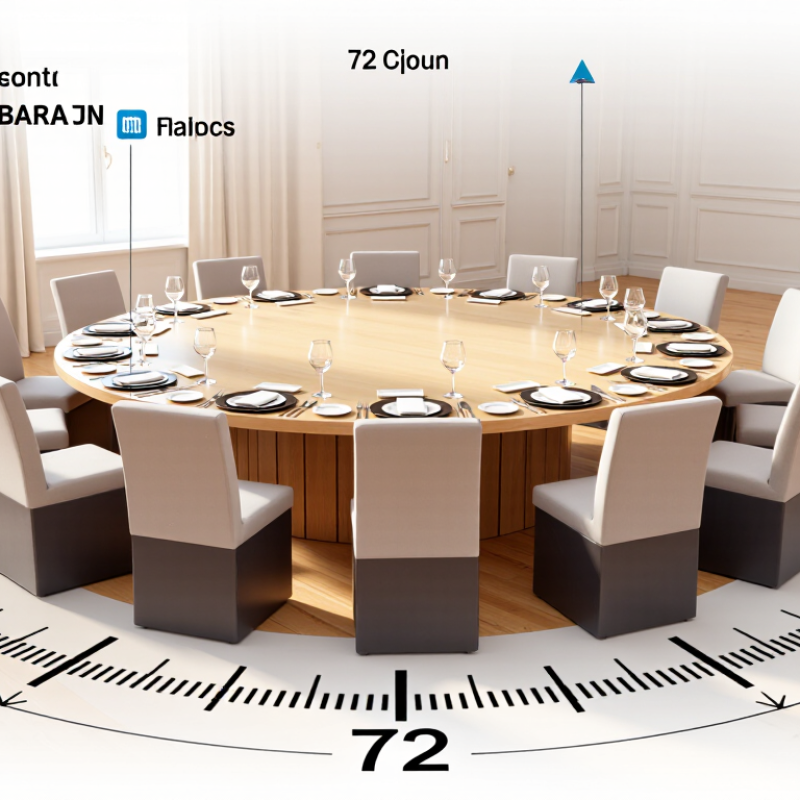
For a 10-person round banquet table, 72 inches is the standard rental-chart recommendation. Professional event-rental seating-capacity charts commonly rate 60-inch rounds for eight guests and 72-inch rounds for ten. A 72-inch tabletop has a circumference of about 226 inches, or roughly 22.6 inches of edge per person when evenly divided. That is the standard. But it describes capacity, not guaranteed comfort.
Ten guests can fit for a brief meal with compact place settings and little shared food. Add wide charger plates, water glasses, and serving bowls, and elbows start competing for room. The chart is useful, but a little optimistic. For a relaxed dinner, eight guests at 72 inches often gives more space to eat and talk; keep ten when the venue plan or guest count requires it. Check the chair width and aisle clearance, too. A table may meet the seating chart and still feel crowded once chairs are pulled out.
Typical rental seating charts commonly list a 72-inch round table for 10 guests.
These are common planning estimates. Actual comfort and capacity vary with chair width, place settings, and the event layout.
A 72-inch round banquet table has a circumference of about 226 inches. Divide that space among ten guests, and each person gets roughly 22.6 inches along the table edge. That is a useful planning estimate, not a guarantee of comfort. Place settings, wide chairs, and serving dishes can quickly make the seating feel close. Ten can fit. Elbow room may be limited.
For a real setup, measure the chairs as well as the tabletop. A chair with broad arms can take up more room than its seat suggests. Leave space behind each chair so guests can pull out and sit down without bumping into another table. If the meal includes shared platters, consider placing them on a separate buffet or choosing a larger table. Small details matter.
Tips: Set out ten chairs and sample place settings before the event. Check whether guests can reach their plates and move their chairs comfortably. If the arrangement feels crowded in an empty room, it will likely feel tighter once people and dishes are added. A little extra space is often worth the trade-off.
For a 10-person round banquet table, height matters as much as diameter. Many commercial banquet tables stand 30 inches high, a practical fit for standard dining chairs. The U.S. Access Board’s 2010 ADA Standards, section 902, specifies a 28–34-inch range for accessible dining surfaces. That range offers useful context, but it does not mean every 30-inch table suits every chair or guest. Small differences matter.
Check the actual tabletop height before ordering or setting the room. Measure from the floor to the top surface, including any fixed edging. Then compare it with the chair’s seat height and allow comfortable knee clearance. A table can meet a common height and still feel cramped when thick cushions or table skirts are added. I’ve seen setup plans overlook those details; the mismatch becomes obvious once guests sit down.
Tips: Measure the assembled table on a level floor. Test one chair before arranging all ten. Keep the tape measure handy. If guests need more clearance, verify the table’s construction and specifications rather than relying on “standard” as a guarantee.
Rental guides commonly rate a 60-inch round banquet table for eight guests, not ten. That rating leaves each person more usable elbow room for plates, glasses, and serving dishes. With ten chairs, the table may feel crowded. There is a difference between fitting guests and seating them comfortably.
For ten people, a 72-inch round is often a more practical starting point. Its larger surface gives place settings more breathing room, especially when dinner includes shared bowls or water glasses. Still, capacity depends on chair width and table supports. Check the actual chair dimensions before confirming a layout. A wide chair can reduce the space available around the edge.
Measure the room, too. Guests need space to pull chairs back and move between tables. A 60-inch table might work for a short event with compact chairs and minimal tableware, but I would not treat ten as its comfortable default. Rental charts are useful, though their numbers can hide real-world details. I have seen layouts look fine on paper and cramped once coats, bags, and serving platters arrive. Keep a little margin.
| Round Table Diameter | Approx. Table Perimeter | Common Seating Capacity | Approx. Edge Space per Guest | Practical Use |
|---|---|---|---|---|
| 48 in (122 cm) | 151 in (384 cm) | 6 guests | 25.1 in (64 cm) | Small groups with room for place settings; limited space for shared dishes. |
| 60 in (152 cm) | 188 in (478 cm) | 8 guests | 23.6 in (60 cm) | A common rental size for eight. Seating ten is generally crowded, especially when serving shared food. |
| 72 in (183 cm) | 226 in (575 cm) | 10 guests | 22.6 in (57 cm) | A common choice for a ten-person banquet setup. Check chair width and service style before confirming the layout. |
| 84 in (213 cm) | 264 in (671 cm) | 12 guests | 22.0 in (56 cm) | Suitable for larger groups, but the larger reach across the table may make conversation and shared serving less convenient. |
Perimeters are approximate and calculated as diameter × π. Edge space per guest is the perimeter divided by the listed seating capacity; it is a planning estimate, not a guaranteed comfort standard. Actual capacity depends on chair width, place settings, table décor, and whether meals are plated or served family-style.
For ten guests, a 72-inch round table is a common banquet-rental standard. Capacity charts often rate it for ten, but that assumes relatively compact place settings. A practical planning allowance is about 24 inches of table edge per guest. A 72-inch table provides roughly 22.6 inches per person, based on its circumference. That leaves little room for wide plates, glassware, and serving utensils. Check the layout with your actual tableware.
Shared dishes change the calculation. On a 72-inch table, a large platter can crowd the center and make guests reach across plates. An 84-inch round offers about 26.4 inches of edge per person, plus more central space for bowls and platters. It is usually the more comfortable choice when food will be passed around the table.
For plated service, a 72-inch table may work well if settings are modest and servers can approach easily. For family-style service, try a full mock-up before ordering. Measure the plates. Add the glasses. Then place the serving dishes. The mock-up may feel fussy, but it can reveal a crowded setup before guests arrive.
A 72-inch round table is the common rental-chart recommendation. It fits ten with compact place settings.
No. It describes capacity, not comfort. Ten guests may feel crowded when chairs are pulled out.
The circumference is about 226 inches, or roughly 22.6 inches per guest. That is tight.
About 24 inches of table edge per guest is a practical planning allowance. Measure your plates and glasses, too.
It provides about 26.4 inches of edge per guest and more central space for serving bowls and platters.
They can, but a large platter may crowd the center. Guests may need to reach across plates.
A 72-inch table may work with modest settings and easy server access. I would not trust the chart alone.
Arrange the actual plates, glasses, and serving dishes on a sample table. Pull out the chairs and check aisle clearance. The mock-up may feel fussy.
What is the standard size for a 10-person round banquet table? A 72-inch round table is commonly rated to seat ten guests and is a practical starting point for banquet planning. It provides about 22.6 inches of table edge per person, while a typical commercial banquet table stands 30 inches high.
A 60-inch round table is often listed for eight guests, so it may feel crowded when used for ten, especially when place settings or shared dishes need extra room. Consider the meal style and service needs before choosing: a 72-inch table can offer a better fit for ten, but larger plates, serving platters, and centerpieces may call for more space or fewer seats. Always check the table’s usable surface and seating arrangement to make sure guests can dine comfortably.

TwinVibe Furniture